
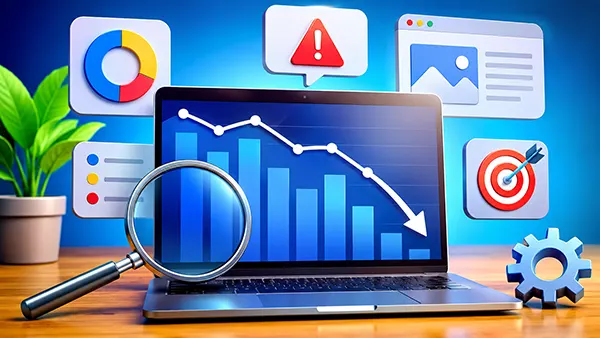
Organic Traffic Decline: How to Diagnose the Problem Within 48 Hours
A sudden decline in organic traffic can affect lead generation, sales, advertising revenue, and overall search visibility. In 2026, search algorithms react faster to technical issues, low-quality content, and weak user signals than ever before. Many website owners waste valuable time searching for isolated causes while rankings continue to deteriorate. A structured diagnostic process carried out during the first 48 hours helps identify the real reason behind traffic losses before the situation becomes critical. The key is to analyse technical factors, search visibility, content quality, and behavioural signals together instead of treating them as separate issues.
How to Identify the Type of Organic Traffic Decline
The first stage of diagnostics is understanding whether the decline affects the entire website or only specific sections. A global drop often points to technical problems, indexing errors, manual actions, or major Google updates. A partial decline usually relates to individual categories, outdated articles, cannibalisation, or weaker search intent alignment. Comparing landing pages in Google Search Console and analytics systems makes it easier to isolate affected URLs within a few hours.
It is also important to compare traffic sources rather than focusing solely on organic sessions. If direct, referral, and paid traffic remain stable while organic visibility falls sharply, the issue is likely connected to indexing, rankings, or SERP changes. If all channels decline simultaneously, the cause may involve tracking configuration errors, server instability, or broader business factors such as seasonality or reduced demand.
Search visibility tools should be checked immediately after identifying the scale of the problem. Platforms such as Ahrefs, Semrush, Sistrix, and SE Ranking allow specialists to compare visibility trends with Google algorithm updates and competitor movements. In 2026, volatility tracking has become essential because search fluctuations now occur more frequently across AI-generated answer systems and dynamic search features.
Signals That Require Immediate Attention
A rapid loss of indexed pages is one of the clearest indicators of a serious technical issue. This may happen because of accidental noindex tags, robots.txt restrictions, canonical conflicts, server downtime, or CMS migration problems. Even a small configuration mistake can remove thousands of pages from search results within hours.
Sharp declines in click-through rate without ranking losses may indicate changes in search snippets, featured results, or AI-generated overviews appearing above standard organic listings. In many industries, websites are losing clicks despite maintaining strong positions because search engines now answer informational queries directly within results pages.
Another critical warning sign involves sudden keyword redistribution. When pages begin ranking for unrelated search terms or lose relevance for commercial queries, the problem often relates to weak topical structure, duplicated intent, or outdated optimisation strategies. This issue has become increasingly common after Google’s semantic interpretation improvements introduced during late 2025 and early 2026.
Technical Checks That Should Be Completed During the First Day
Technical analysis remains one of the fastest ways to identify the root cause of traffic losses. The first priority is checking crawlability and indexability. Google Search Console coverage reports, server logs, and crawl simulations help identify blocked resources, broken redirects, redirect loops, and indexing anomalies. Many websites experience ranking losses simply because search bots cannot properly access essential pages.
Core Web Vitals should also be reviewed immediately. Since Google’s page experience systems became more integrated with mobile indexing in 2026, slow loading speed, layout instability, and interaction delays can reduce visibility across competitive queries. Mobile usability errors often affect rankings faster than desktop issues because most industries now receive the majority of organic traffic from smartphones.
Another important area involves structured data and rendering problems. JavaScript-heavy websites sometimes fail to render critical content correctly for search engines. If important text, navigation, or product details only appear after delayed script execution, Google may interpret pages as thin or incomplete. Modern diagnostic tools such as Chrome Lighthouse, Screaming Frog, and Sitebulb help uncover these rendering limitations quickly.
Common Technical Errors Behind Ranking Losses
Migration mistakes continue to cause severe organic visibility losses in 2026. Incorrect redirect mapping, protocol conflicts, missing canonicals, and URL structure changes can break years of accumulated ranking signals. Even properly designed redesign projects may fail if technical SEO validation is ignored before deployment.
Another frequent issue involves accidental duplication generated by filtering systems, pagination parameters, or CMS plugins. Search engines may struggle to determine which version of a page deserves priority. As a result, ranking signals become fragmented across multiple URLs instead of strengthening one authoritative page.
Hosting instability also remains underestimated. Frequent server interruptions, DNS issues, and slow response times reduce crawl efficiency and harm user experience simultaneously. Search engines now react more aggressively to unreliable websites because they prioritise stability for both indexing systems and real visitors.
Content Quality and Search Intent Evaluation
Once technical factors are reviewed, attention should shift towards content relevance and search intent alignment. Google increasingly prioritises pages that demonstrate practical expertise, trustworthy sourcing, and clear user value. Pages created primarily for keyword targeting without substantial insight often lose visibility after algorithm adjustments.
Analysing declining URLs individually helps reveal patterns. Articles with outdated statistics, weak topical depth, or repetitive information frequently experience gradual ranking deterioration. In 2026, content freshness matters not because of artificial date updates but because users expect accurate and contextual information supported by current data and genuine expertise.
Competitor comparison is another essential step during the diagnostic process. If competing pages provide more detailed analysis, better structure, stronger author credibility, or improved multimedia support, rankings can shift rapidly even without technical problems. Search engines increasingly reward websites that demonstrate topical authority across entire subject clusters rather than isolated keywords.
How Behavioural Signals Influence Organic Visibility
User engagement metrics now play a stronger indirect role in search performance. High bounce rates, weak interaction depth, and short session durations often signal that content fails to satisfy user expectations. Although Google does not publicly confirm every behavioural factor, consistent negative engagement patterns usually correlate with declining rankings.
Search intent mismatches are another major cause of organic traffic decline. Informational pages targeting commercial queries, or transactional pages attempting to rank for educational searches, create friction between user expectations and page content. Modern search algorithms evaluate this alignment more accurately than previous ranking systems.
Trust indicators also influence visibility, especially in industries connected to finance, healthcare, marketing, and technology. Clear author information, transparent editorial standards, reliable citations, updated references, and accurate factual statements contribute to stronger perceived credibility. Websites lacking these elements often struggle after core algorithm updates focused on E-E-A-T quality signals.